Original Mustang Home Run King Monty Waltz Reflects on Record and Team History
6/22/2026 12:45:00 PM | Baseball
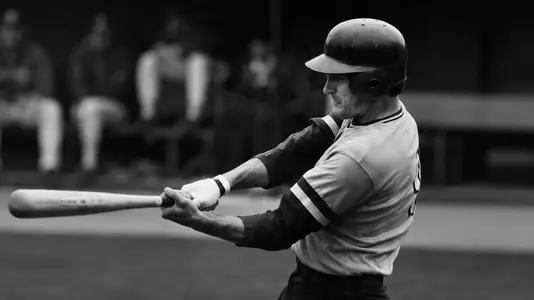
SAN LUIS OBISPO, Calif. — Cal Poly's record book includes three names that stand above the rest in the single-season home run column: Monty Waltz first set in 1985, Steve Wood 13 years later, and most recently Big West Co-Field Player of the Year and ABCA All-West Region First Team honoree Ryan Tayman. With 18 homers this year, Tayman tied the 40-year-old mark, but Waltz still stands as the original Mustang home run king in a time when the program was ramping up for its Division II heyday.
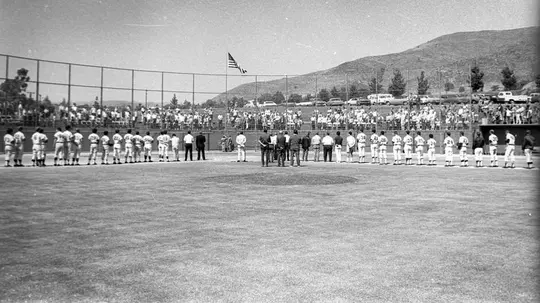
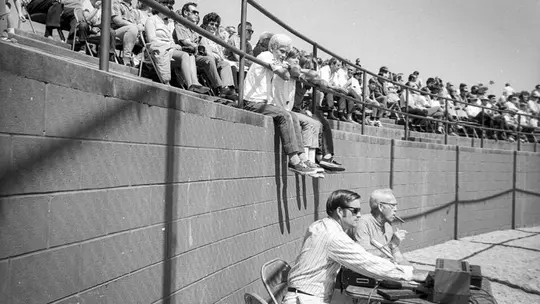
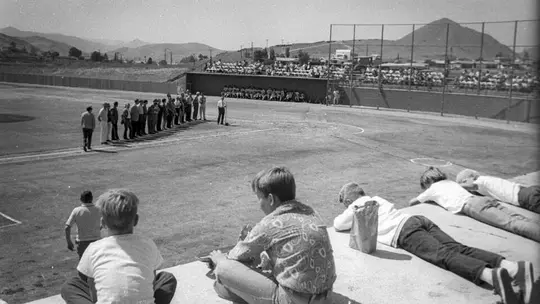
Long before Cal Poly Baseball became a nationally respected mid-major with upscaled facilities and fans packing into the stands at home games, it practiced on a field that left some players nervous to field ground balls or sprint the infield without rolling an ankle.
Waltz, a former Mustang and Cal Poly Baseball Hall of Famer, remembers those days vividly, noting the rocks in the infield, and a smaller number of home crowd supporters. He also remembers the work ethic, the brotherhood, and the opportunity he was given as a walk-on, which turned into a record setting career, and a life-long commitment to elevate the program.
As Waltz finished his high school days, he was left to decide between attending Cal Poly and Arizona State. Being a three-sport athlete in high school, he believed he was too small to play football or basketball at the next level, but knew he had great hand eye coordination. He was ready to work towards his baseball dream, and told me “all I needed was a shot.”
So when he was given an opportunity to walk on to a Cal Poly baseball program full of graduating seniors in 1981, he knew his work ethic and love for the game would set him apart from the rest of the competition. Redshirting his freshman year, he was told by Hall of Fame coach Berdy Harr “you’re left handed and we always put a big heavy right hander at first… can you play the outfield?” That's what Waltz did, he put his head down and worked, and became a part of a freshman dominated team in 1982, playing right and left field for the remainder of his career. Waltz would go on to hit 18 home runs for the Mustangs in 1985, setting a record that stood for nearly 15 years, and still places him at 3rd all time in a season for the mustangs.
On top of this accomplishment, he still finds himself in the top 10 all time Mustangs today for numerous different offensive statistics. Waltz’s legacy has carried on throughout the years as well, with the award for the best offensive Mustang being named after him, the “Monty Waltz Big Stick Award.”
Cal Poly’s field and facilities have changed drastically over the last 40 years, which Waltz contributes a lot to the alumni like himself and others for continuing to stay active in their love for the Mustangs. Robin Baggett, Al Montna and Jason Novi are three of the first names that come to mind when paying thanks to investors and donors who have helped enhance the program, and they are celebrated with their names displayed at our home ball park, "Robin Baggett Stadium," "Al Montna Baseball Hitting Facility" and above the "Novi Family Dugout."
Before Cal Poly had an upscaled home field that seats over 3,000, they played their home games at the local ball park, Sinsheimer. Waltz had great success at this park, noting that he hit more home runs here than most would expect. Sinsheimer had a deeper outfield, which Waltz remembers the proportions of, “330 down the lines, 390 in the alleys and 410 to center.”
Like all greats, Waltz had the park memorized, and had adapted a skill which gave him an edge to hitting balls out. He had been taught by coach Harr that getting the ball up in the air to the opposite field would let the ball hit the jetstream that was consistently blowing at Sinsheimer. So, Waltz spent extra time learning how to hit the ball inside out and lift it into the jetstream, to give him that advantage.
Waltz believes the ways of recruiting and training have also changed a lot over the years, as today athletes commonly specialize in one sport growing up, and use club ball to play it all year long. On top of that, weight training and off season workout programs are far more researched today, with advancements in trackable growth and development technology. But Waltz had a different way of getting stronger going into the 1985 season, where he jumped from 7 home runs in 1984, up to 18 in 1985.
He actually took the summer off going into that season, where he worked for his uncle in Hawaii. Instead of hitting thousands of balls in the cage like he had done in the past, he started lifting heavy weight with the local Hawaiians, and saw his biggest growth in strength in his life. He attributes this to helping all of those balls he had hit to the warning track in the previous years, to finally start getting over the deep fence at Sinsheimer and other ball parks.
Apart from his playing days, Waltz has continued to show his support and today he is as passionate as ever to progress the Mustangs into a dominant program. He helped start the Berdy Harr scholarship in mid 1990s to help give back to student athletes who could use extra assistance for school, along with helping lead fundraising which gave the Mustangs their first on campus club house.
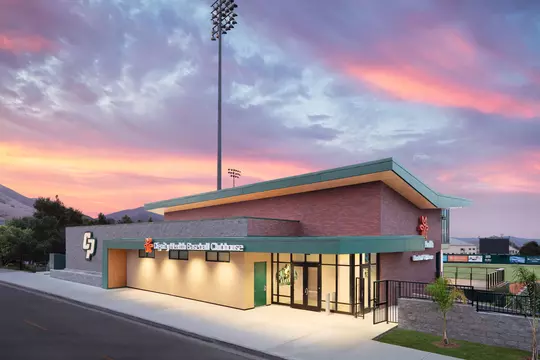
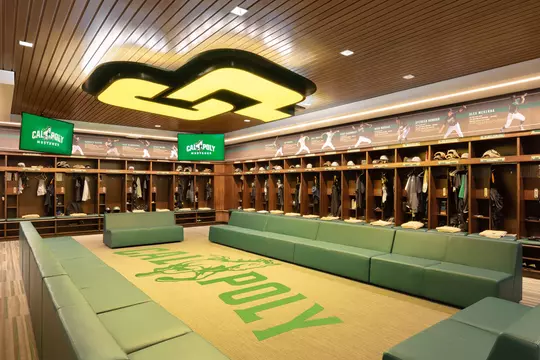
Taking a look at the Dignity Health Baseball Clubhouse that the Mustangs call home today, it truly shows the investment and support that the Mustangs have received over the years. When Waltz helped raise funds for the 1600 square foot club house in 2001, it was small and modest, but for players who had grown up at Sinsheimer, it was the first true home of Mustang Baseball.
Today’s players train in a 10,680-square-foot complex with meeting rooms, a kitchen, a film room, sports-medicine center, and professional-grade locker room — amenities unimaginable to players in the early ’80s, done with a budget of $9.77 million.
Bill Hoffman and Jason Maas were two more alumni who were integral parts of completing the renovations and updates to the stadium the Mustangs call home today. Hoffman contributed a one million dollar donation to the Mustangs during the process of construction, which took place in 2020, and his donation helped expand the capabilities of Cal Poly’s visions.
Jason Maas was a longtime teammate of Waltz, and they spent most of their college time together, before Maas’ senior year in 1985. Maas was selected in the 10th round by the New York Yankees in the 1985 draft, and Waltz confirms that the two of them kept a lasting relationship following their days together as Mustangs. Like Waltz, Maas too finds himself in the top 10 of numerous offensive statistics, including being the current all time leader in triples for the Mustangs, both for an individual season in 1984, and a career.
Additionally, Waltz and Maas hold the first and second spot for career walks for the Mustangs, which shows how dominant and feared these two were during their time playing together. They should not only be acknowledged for helping propel Cal Poly forward not only with their duties as alumni, but also creating a dominant 80’s baseball team which would win the 1989 Division II championship game a few years after they graduated.
In today’s era, for some programs it has been difficult to adjust to changes in scholarships, roster limits and the addition of NIL money, which has altered recruiting processes and strategies. This year, the NCAA approved a scholarship change from 11.7, to a possible 34 “full” scholarships per athletics team. This puts a bigger weight on the backs of donors and alumni, to increase funding so that the Mustangs can continue to land top end athletes.
Someone who Waltz thinks has been successful at adapting to the changes of college baseball however, is head coach of the Mustangs, Larry Lee. Lee recently was given the inaugural “Wayne Graham Award for Teaching Excellence,” which carries a lot of honor and recognition. This award is named after legendary Coach Graham, who was an NCAA baseball coach for 38 years, with a career winning percentage of 75%, and a National Championship with the Rice Owls in 2003.
Waltz also has a unique connection to Lee, as he played against Lee in his younger days, though it is left to history as to who won their pitcher/hitter duels. But just like the alumni and donors, Lee has been important to the Mustang’s continuous growth as a program, and his son Brooks Lee, who recently graduated as a Mustang in 2022, was the highest selected Mustang in the MLB draft, being picked 8th overall by the Minnesota Twins.
In 2025, Waltz and numerous other alumni and donors attended the Big West championship victory over Fullerton, and then made the journey up to Napa, Oregon, where they were “living the dream” while watching Cal Poly take down the national powerhouse at Oregon’s home stadium, in the regionals of the NCAA tournament. Waltz admitted that he felt an extra connection to this victory, and he was so happy to see the program come “full circle 40 years later,” with the presence of long time supporters and alumni, who have been invested in the program’s success since the days where the Mustangs played in Division II, and across the street at Sinsheimer Stadium.
The Mustangs took yet another step this season toward their ultimate goal of reaching Omaha, falling just two wins shy of the historic feat after winning a second consecutive Big West Championship, sweeping the Los Angeles Regional and advancing to play West Virginia in the Morgantown Super Regional.
Waltz hopes the program can continue this journey of success, and work their way to be an even more nationally respected mid-major, with the help of fundraising and supporters who can lift the Mustangs above their competitors, and give them an edge. He and others truly believe that Cal Poly is on a path of success, and their win last year on the national level makes this dream of becoming a mid-major power house seem all the more attainable. Baseball is a team sport for Waltz, and whether he is on the field playing, or in the stands cheering, the success of the Mustangs will always be a top priority. If Monty Waltz helped set the foundation for Mustang Baseball, today’s team is building the next chapters of a program with national ambition.
Support Cal Poly Baseball through Project Omaha and help fund scholarships and holistic student-athlete support, ensuring the program has the resources to compete at the highest level amid the evolving landscape of college athletics, including the NCAA’s increase to 34 full scholarships. Donations directly support student-athletes, helping attract and retain elite talent while upholding academic excellence. As part of the initiative, a matching fund specific to Project Omaha has been established by the University, providing permanent investment into the program’s operational budget and further strengthening Cal Poly Baseball’s competitive foundation.
Make your impact today by supporting Project Omaha, powered by Players Edge.