The Ikeda Brothers: A Story of Cal Poly and Japanese-American Baseball on the Central Coast
5/11/2026 2:30:00 PM | Baseball
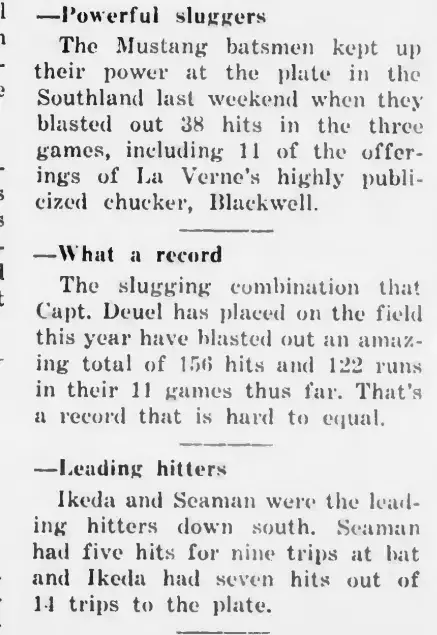
SAN LUIS OBISPO, Calif. — “IKEDA STARS,” wrote one Cal Poly reporter on March 21, 1941. “Seirin Ikeda played sensationally at shortstop for the local collegians. His sensational catch in the third inning brought a round of applause from the fans in the grandstand.”
The history of Central Coast baseball would not be complete without the incredible story of the Ikeda family, specifically, three brothers: Kazuo, Seirin, and Saburo. The Ikeda family lineage has been steeped in the power of baseball for five generations, and the story of Juzo and his sons is one of strength, injustice, and enormous grit that has snowballed into an agricultural powerhouse within the wider Central Coast community.
Juzo Ikeda, father of Kazuo (Kaz), Seirin, and Saburo, instilled the power and value of baseball in his sons at a young age.
In 1924, Juzo Ikeda, a farm laborer who had migrated from Japan in 1905 through San Francisco, made the hard decision to send his family, his wife, three sons, and one daughter, to his parents’ home in Japan for schooling and a lower cost of living.
While they were away, Juzo attended his first baseball game in Hanford, California, and was so intrigued that he picked up an English-to-Japanese dictionary in order to understand the rules and strategies. After three years, Juzo’s three sons, Kazuo, Seirin, and Saburo, and their mother, Sei, returned from Japan. Juzo discovered the boys had lost most of their English and decided they should relearn the language the same way he had: through a love of the sport of baseball.
Juzo Ikeda, his friend Bill Arakawa, who played first base on a semi-pro Japanese American baseball team, and Vard Loomis, a recent graduate of Stanford and a star pitcher for their baseball team during the late 1920s, built the Ikeda brothers into community institutions by coaching them in the magic of baseball.
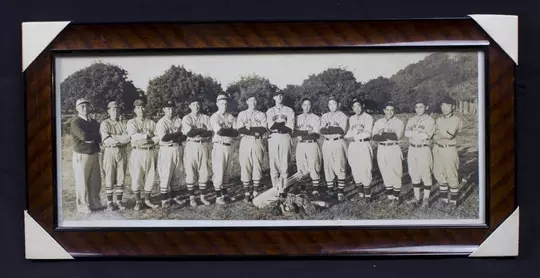
Seirin Ikeda, Juzo’s second son, remembered starting with a bat at only four or five years old, around the time his father recovered from tuberculosis in 1932. TB scars forced Juzo away from the long days of intense farm labor he was used to and allowed him to focus more time on family and community efforts, like a baseball team for his sons and the wider Japanese American farming community in the Arroyo Grande area. Juzo and his friend Vard Loomis, who worked as a merchant in the area, coached and organized the Arroyo Grande junior league teams, with first team members Kazuo, Seirin, and Saburo. The boys were part of the Young Men’s Association on the Arroyo Grande Growers team.
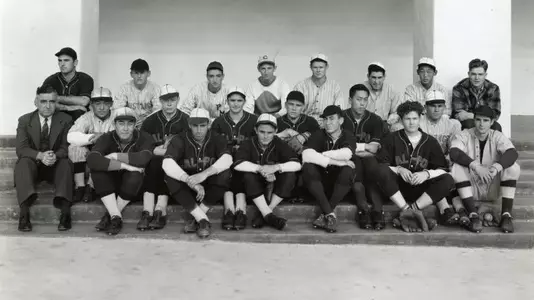
It was Vard Loomis himself who positioned two Ikeda brothers, Kazuo and Seirin, to enroll as students at Cal Poly and continue their baseball legacies after high school graduation.
So, as Saburo finished his high school diploma and went on to attend UC Berkeley, Kaz and Seirin started college life at Cal Poly as commuter students, still able to assist their dad on the family farm in Arroyo Grande and still able to play baseball. Kazuo majored in Farm Crops, and Seirin in Agricultural Mechanics.
Kaz and Seirin became Cal Poly stars and earned their lettermen jackets on the varsity team within their first year, Kaz as pitcher and catcher and Seirin as shortstop, respectively.
The boys even taught their teammates hand signals associated with the Japanese American league they had started in, as opposed to the traditional signals, to give them an edge in games.
Seirin was notably a good shortstop and had quite the swing on him, thanks to all that farm work. According to Cal Poly sports reporters, Seirin consistently racked up two or three base hits in a game.
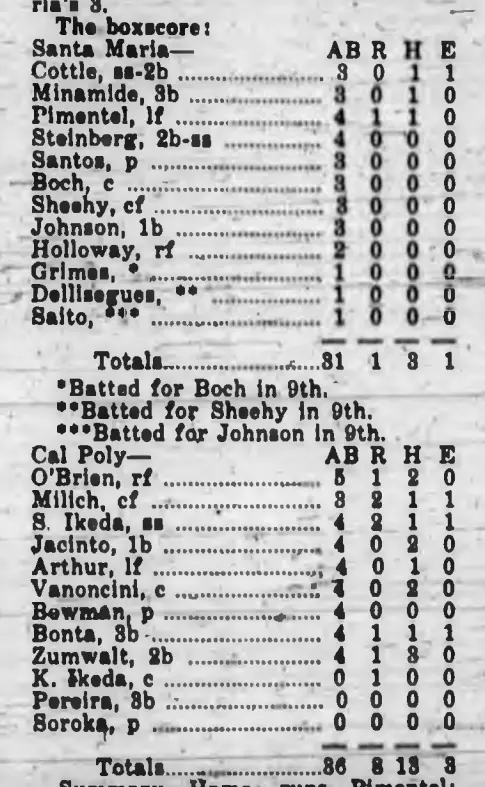
These boys became Cal Poly athletics and agriculture pillars, being simply referred to as “the Ikeda brothers” throughout periodicals and in Cal Poly’s yearbook, El Rodeo.
Notably, reporters wrote “S. Ikeda handled three tough chances at the short patch without a miscue,” and regularly highlighted his incredible skill of hitting home runs. Reporters also frequently recorded the Ikeda brothers’ strong arms and quick throws.
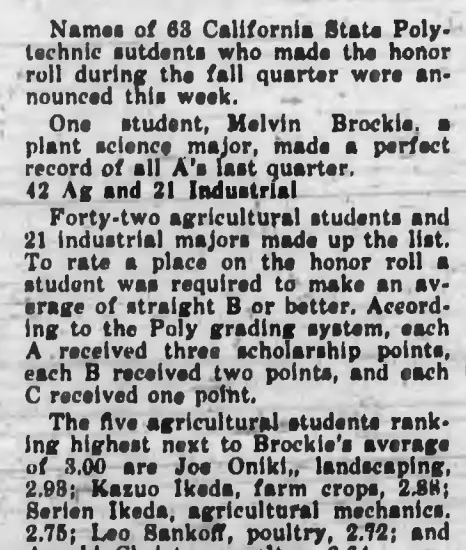
In his first year, Seirin Ikeda was declared MVP of the Cal Poly 1939 Varsity team. Both brothers made the honor roll in 1940 (3rd and 4th overall in agricultural majors).
Seirin Ikeda was even invited by the coach of the Civilian Conservation Corps to play second base for the team. This would have salaried Seirin at $125 per month and placed him alongside none other than a young Jackie Robinson, who had just graduated from Pasadena City College. Seirin rejected the offer after consulting his father Juzo, but the fact remains the Ikeda family name was whispered among the greats.
Seirin received his BS in Agricultural Mechanics, and Kazuo nearly received a certificate in farm cropping. This would have marked a historic moment for the brothers, their team, and Cal Poly as a whole, as Kazuo’s degree would have been among those of the first class of four-year bachelor’s degrees being offered at Cal Poly. California granted collegiate status to the California Polytechnic School in 1940, and what would have been Kazuo’s graduation year, 1942, was the first class ever to receive an official four-year degree from California Polytechnic College.
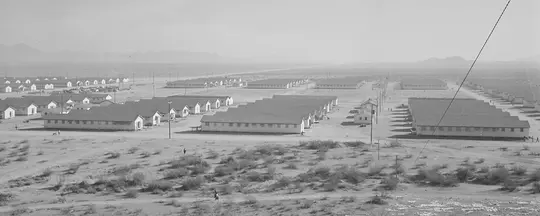
This possible first in history was stolen from the Ikedas upon the signing of Executive Order 9066 on February 19, 1942, which authorized the United States military to establish areas from which certain citizens could be excluded. This forceful displacement affected the Ikeda family immensely. The 100 acres of land upon which the three sons and father had earned their life’s wages was declared part of these exclusion areas, effectively uprooting them from their home and banishing them to an overcrowded schoolhouse that housed a multitude of other uprooted Japanese American families. The Ikedas were forced to stop stewarding their land immediately, locking up whatever farming equipment they had spent years using in a tiny, two-room property on their lot, with only a padlock protecting it. Whatever couldn’t fit, meaning cars, tractors, and other expensive equipment, was sold for pennies on the dollar of its worth.
At this vital historical moment, Japanese American families were robbed of a legacy of generational wealth. Many farming families had spent years tending to land they were leasing under the name of non-Japanese American citizens, due to the California Alien Land Law of 1913, a racialized act that prevented immigrants like Juzo Ikeda from ever being eligible for citizenship and, further, from ever being eligible to own land or even possess long-term leases. Children of individuals like Juzo, in this instance Kazuo, could lease land as American citizens, but only when they turned 18 years of age. This meant that for many Japanese American coastal farming families with children under the age of 18, Executive Order 9066 meant they couldn’t access the leased land they had been tending, or the produce on it, causing them to lapse on leases and lose all the tenable rich land they had been stewarding and tending to for decades, as well as all animals and personal property they couldn’t carry in their own two hands.
Thankfully, due to Juzo Ikeda’s connections, the Ikedas were able to leave their land in the hands of fellow coach and dear friend Mr. Vard Loomis and his family. The Ikedas’ story in this way is unique and rare. Many Japanese American families lost every inch of land and their farming equipment to Executive Order 9066 and were left with nothing to their family names.
The cramped schoolhouse was not the final landing point for the Ikeda family. With Executive Order 9066 and the creation of the Wartime Civil Control Administration on March 11, 1942, the government began issuing Civilian Exclusion Orders, requiring “all persons of Japanese ancestry, including aliens and non-aliens” to evacuate the places they called home. These Japanese American community members were forcibly incarcerated in assembly centers. Three of the Ikedas, Seirin, Saburo, and their mother, Sei, were incarcerated at Tulare Assembly Center, a partially reworked fairground mainly used for farm animal presentations. Kazuo, through an application for an extreme circumstance permit, stayed behind with his father at a San Luis Obispo medical center, where Juzo had been hospitalized six months earlier due to a paralyzing farming accident.
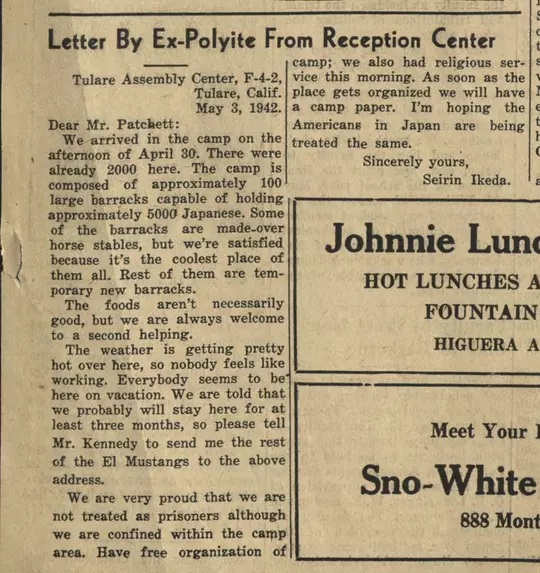
In an oral history conducted by the Ethnic Studies department of Cal Poly, Kazuo Ikeda remembered temperatures of over 100 degrees daily at Tulare. He remembered the “rooms” families were incarcerated in were horse and cow stalls, still filthy with manure on the floors and walls. Incarcerated families, like Sei, Saburo, and Seirin Ikeda, were forced to clean the spaces themselves in order to make them as livable as possible.
When Tulare had a medical center deemed apt enough to keep Juzo Ikeda alive, Juzo and Kazuo were also forcibly moved to Tulare, about two and a half months later. The Ikedas were incarcerated at Tulare for three months before being moved to an army-issued more permanent location, Gila River Relocation Center. This concentration camp was located on the unceded territory of the Onk Akimel O’odham people in the state of Arizona, at a site being controlled by the Commissioner of Indian Affairs in 1942. The Ikedas were just five of the approximately 16,000 Japanese Americans incarcerated at Gila River. They were placed on the Canal side of camp, which had access to the hospital to care for Juzo. The other side of the camp was the Butte side.
As soon as he could, Saburo Ikeda left Gila for another camp where he could continue his education. Kazuo remembered that Gila was the “dustiest place.” While incarcerated, Kazuo worked daily, as many incarcerees were required to, as a sanitation inspector, maintaining the status of the restrooms and kitchens and getting paid only $16 a month. By the time Kazuo and the rest of the family were settled at camp, the poor conditions, weather, and sanitation of the hospital had caused Juzo to pass away. The family was now in mourning, forcibly taken from their homes. Saburo, who was now incarcerated a few states away, could not afford to travel back to Gila to attend his father’s funeral, due to the prison wages afforded to each incarceree.
The Ikedas and other Japanese American families, facing the despair of incarceration, turned inward to their communities for morale. Kenichi “Zenny” Zenimura, founder of the Fresno Japanese Baseball Club and a famous Japanese baseball player, was also incarcerated at Gila River. Zenimura built a baseball diamond at Gila River with shovels, flour, and grit. This was not a Lincoln Log field. Zenimura dug regulation-size dugouts, built grandstand seating, and sowed castor plants to mark the outfield line. The wooden home plate is available for observation at the National Baseball Hall of Fame and Museum.
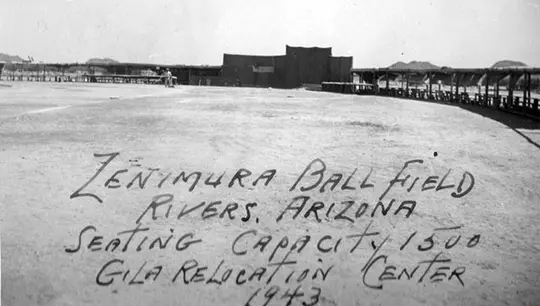
Soon enough there were 32 teams just at Gila, enough to play a full season of baseball. Kazuo remembered forming the Varsity “A” team from the Canal side of Gila River Camp, playing just a few short games before going to work doing farm labor in Idaho.
Seirin, in a small portion of free time, wrote to Mr. W. C. Patchett, the Cal Poly Dean of Agriculture at the time, reported his initial feelings about being forcibly relocated. Importantly, the letters incarcerees like Seirin wrote were scanned by armed guards before being allowed to be sent off through the mail. This letter was published in the Cal Poly newspaper, El Mustang.
Incarceration camps like Gila River were sites of intense loss for Japanese Americans. Over 60 percent of incarcerated individuals were citizens born in the United States and raised here. The ability of Japanese Americans like the Ikeda's to maintain morale and strength is astounding.
The only reason Kazuo was allowed to leave was because of his answers to a questionnaire all incarcerees were required to answer. Part of this questionnaire, which offered a possibility of families being released from incarceration early, required first-generation immigrants to renounce their citizenship to Japan, leaving individuals like Kazuo’s mother without citizenship anywhere, due to the Alien Land Laws mentioned earlier in this story. Kazuo answered yes to these questions, and another asked if he would serve in the war to fight against Japan. In order to be able to start farm labor so his mother, brothers, and himself could afford to pick up the pieces of their farm and start again, Kazuo answered “Yes, yes.”
Kazuo went to work in Idaho, then Chicago, and then Utah seasonally. By the time he went to Utah, Gila River and other sites of incarceration had begun to close in early 1945, upon the end of World War II.
Sei Ikeda returned to Arroyo Grande in June of 1945. With none of her sons there, Sei stayed with a neighboring family until Kazuo returned in November. Upon his return, Kazuo connected with Vard Loomis, who, just as he promised, had kept the land for the Ikedas to return to. Loomis had leased it out to some other farming families on a short-term lease, and as soon as they had rooted up all of the crops they planted, the Ikedas were able to start farming again. Kazuo and Sei, having lost their house, lived in the two-room building that had stored all of their life’s belongings and farming equipment while they were incarcerated. In an oral history, Kazuo remembered “making the little two-room into a makeshift home, kitchen on one side and bedroom on the other. It was only 12’ by 24’… the first several years we struggled… we had to work day in…”
As Kazuo and Sei picked up the pieces, Saburo was off serving in the intelligence corps in Japan. Seirin got sick while farming in the harsh cold in Toledo, and one of his old tuberculosis scars from a childhood illness flared up, so he was hospitalized in Toledo and then transferred to a hospital in San Luis Obispo, where he got well. As soon as his lungs allowed, Seirin returned to farm on his family land.
Despite these additional challenges, as soon as he returned to the Central Coast, Kazuo began farming again, and his strong ties to his community saw him through the impossible task of managing 100 acres of land solo. While Kazuo farmed as much land as he could starting back up, he also lent some of his land to other returning Nisei (second generation Japanese-Americans) who had lost their own farms. This allowed other Japanese American families to rebuild their own wealth and ensured the Ikedas could stay at home on the Central Coast.
By 1948, Kazuo had built the land back up to a fully functional and working status with the help of his brothers. This included a home on the 60-acre farmland in Oceano, so his mother and himself no longer had to live in a two-room shack. Saburo returned after the war and enrolled at UC Berkeley, earning a degree before returning to farm on the Central Coast with his brothers.
In 1950, Kazuo met his wife, Mitzi, through a friend in Morro Bay. By 1955, Kazuo purchased a new home in Oceano.
The Ikeda brothers soon transformed their family farm into a business that still runs today. They became members of the Pismo Oceano Vegetable Exchange, and their farming legacy took off. Tom Ikeda, grandson of Juzo, was president of POVE for seven years. He is now a co-owner of Ikeda Bros farm and market.
Mr. Clyde Ikeda, son of Seirin, remembers hard days of farm labor during his childhood. He helped “wash, sort, and pack tomatoes and bell peppers on the weekends,” while his father and uncles worked 10 to 12 hours a day. He values the memories of his summers working with his family and is happy that as he grew older, the farm grew more successful and their family got to spend more time together.
Another aspect of the Ikeda brothers’ childhood has trickled down through generations: the love of the game. All three of the Ikeda brothers became coaches for baseball teams in San Luis Obispo County. Clyde remembers his family ethics on the farm, transferring to how his dad and uncles coached baseball: “As in farming, you need to know the basis, the fundamentals to create a winning, successful environment.”
Kazuo coached the 13-15 Babe Ruth League, Seirin coached the 9-10 age group Little League, and Saburo coached the 11-12 age group Little League in the area. Kazuo’s team traveled to Ohio for the Babe Ruth World Series in 1977. His long-lasting passion and efforts on and off the field placed Kazuo’s name and legacy on a field at the Soto Sports Complex and Paulding Middle School in Arroyo Grande. Clyde Ikeda played for all of them. He remembers always having winning teams, a testament to his coaches’ perseverance and wisdom.
These brothers maintain impact in the wider Central Coast community through their influential family and lasting philanthropic contributions to youth baseball, religious organizations, and farming efforts.
My dad and brothers were quiet and humble. They preferred to defer attention away from themselves. They were all generous with their time and financial resources to help the community, especially when it came to baseball.Clyde Ikeda (son of Seirin, nephew of Saburo and Kazuo)